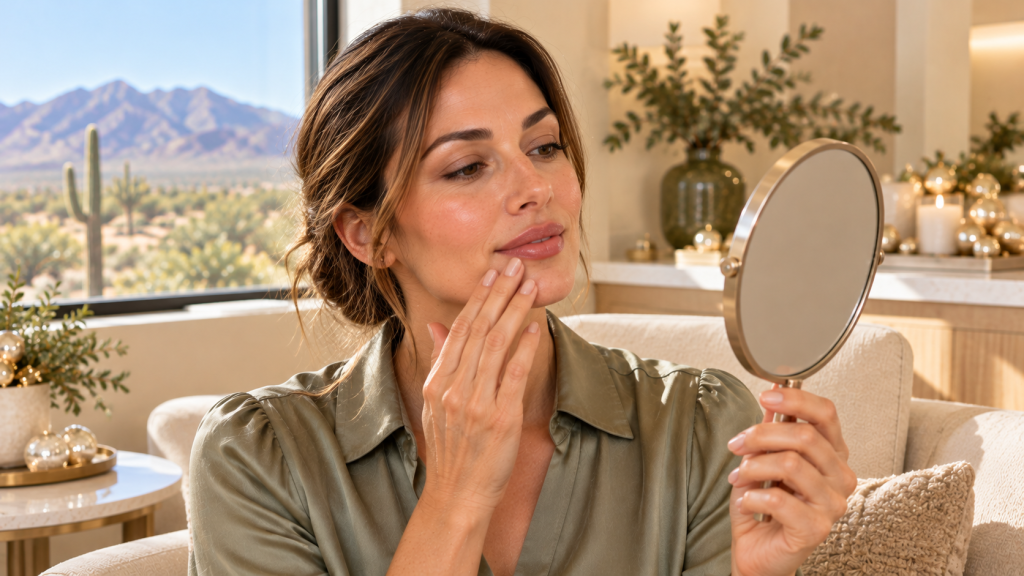
Tucson’s cooler months bring a welcome break from intense summer heat, but your skin might not celebrate the change. Between chilly mornings, low humidity, and indoor heating, your complexion can quickly go from comfortable to tight, flaky, and irritated. Even people who rarely experience dryness may notice rough patches or increased sensitivity as temperatures drop.
Finding effective high desert dry skin remedies starts with understanding how Tucson’s environment affects your skin. Desert air contains relatively little moisture, and cooler weather can make it harder for your skin to maintain hydration. Add hot showers, harsh cleansers, and inconsistent moisturizing, and you have a recipe for persistent dryness.
At Greenspring Medical Aesthetics, we understand that maintaining comfortable, healthy-looking skin requires more than applying a moisturizer whenever dryness appears. A consistent routine that supports your skin’s protective barrier can help reduce moisture loss, improve texture, and keep your complexion feeling balanced throughout the season.
Whether you’re dealing with occasional tightness or recurring flaky patches, the right skincare habits can make a meaningful difference.
Jump to:
- TLDR Guide
- Detailed Breakdown
- Why Tucson's Cooler Months Can Make Your Skin Feel Drier
- High Desert Dry Skin Remedies That Actually Support Hydration
- How to Adjust Your Skincare Routine for Tucson's Cooler Weather
- Which Skincare Ingredients Are Best for Flaky, Tight Skin?
- Can Medical-Grade Skincare Help With Desert Dryness?
- When Should You Consider a Professional Skin Analysis?
- Are Medical Facials Helpful for Dry, Flaky Skin?
- When Dry Skin Is Accompanied by Uneven Texture or Tone
- Everyday Habits That Help Prevent Dry Skin
- Key Takeaways
- FAQs
TLDR Guide
The most effective high desert dry skin remedies focus on preventing moisture loss, protecting the skin barrier, and reducing everyday irritation. Tucson’s cooler months can make dryness more noticeable, so your skincare routine may need a few seasonal adjustments.
Here are the essentials:
- Switch to a gentle cleanser: Choose a fragrance-free, non-stripping formula that leaves your skin comfortable after washing.
- Use a richer moisturizer: Creams containing ceramides, glycerin, or other barrier-supporting ingredients can help reduce moisture loss.
- Apply moisturizer promptly: Moisturizing after cleansing or bathing helps retain water in the skin.
- Limit hot showers: Lukewarm water and shorter bathing times are generally gentler on dry skin.
- Avoid over-exfoliation: Frequent scrubs and strong exfoliating acids can worsen flaking and sensitivity.
- Protect against sun exposure: Broad-spectrum SPF 30 or higher remains important during Tucson’s cooler months.
- Consider professional guidance: Persistent dryness may benefit from a personalized skincare assessment.
The goal isn’t to add more products to your routine. It’s to choose products and habits that help your skin retain moisture while minimizing unnecessary irritation.
Detailed Breakdown
Why Tucson’s Cooler Months Can Make Your Skin Feel Drier
Tucson’s high-desert environment presents challenges for maintaining skin hydration throughout the year. Although summer receives much of the attention, cooler weather can create its own combination of dryness triggers.
Low humidity increases the difference between moisture levels in your skin and the surrounding air. This can contribute to transepidermal water loss, the process through which water naturally evaporates from the skin.
When the skin barrier isn’t functioning optimally, moisture escapes more easily, and irritants may penetrate the skin more readily.
During Tucson’s cooler months, several factors can make this problem worse:
- Dry outdoor air: Low environmental humidity can increase moisture loss.
- Indoor heating: Heated indoor environments may further reduce relative humidity.
- Temperature changes: Moving between cool outdoor conditions and warm indoor spaces can affect skin comfort.
- Hot showers: Prolonged exposure to hot water can strip away some of the skin’s protective oils.
- Harsh skincare products: Strong cleansers and excessive exfoliation may aggravate an already-sensitive barrier.
Our guide to skincare for desert living explores how local environmental conditions can influence daily skincare decisions.
Understanding these triggers helps explain why the same lightweight moisturizer you enjoyed during warmer months may no longer provide enough comfort.
High Desert Dry Skin Remedies That Actually Support Hydration
The best approach to dry skin combines moisture replenishment with habits that help prevent further water loss.
Rather than relying on one miracle product, focus on building a routine that addresses the underlying causes of tightness and flaking.
1. Choose a Gentle, Hydrating Cleanser
Cleansing is essential for removing sunscreen, makeup, and everyday impurities. However, some cleansers can leave dry skin feeling stripped and uncomfortable.
Strong detergents, heavily fragranced formulas, and excessive washing may disrupt the skin’s protective barrier.
Choose a gentle cleanser designed for dry or sensitive skin.
A suitable cleanser should:
- Remove impurities without leaving a tight sensation.
- Avoid unnecessary fragrance and harsh exfoliating ingredients.
- Work effectively with lukewarm water.
- Support comfortable daily cleansing.
For many people with dry skin, cleansing once in the evening and using a gentler approach in the morning may be sufficient.
The right frequency depends on your skin’s needs, activity level, and products used.
2. Apply Moisturizer While Your Skin Is Slightly Damp
One of the simplest high desert dry skin remedies is adjusting when you moisturize.
After cleansing or bathing, gently pat your skin dry and apply moisturizer while a small amount of moisture remains on the surface.
This helps support hydration and reduces the opportunity for water to evaporate.
Look for ingredients that perform different moisturizing functions:
- Humectants: Glycerin and hyaluronic acid attract and hold water.
- Emollients: Ingredients such as squalane help soften and smooth the skin.
- Occlusives: Petrolatum and dimethicone help reduce water loss.
- Barrier-supporting lipids: Ceramides and cholesterol help replenish components of the skin barrier.
A moisturizer combining several of these ingredients may be more effective for persistent dryness than a lightweight hydrating serum used alone.
For very dry areas, a thicker cream or ointment may provide additional protection.
3. Repair and Protect Your Skin Barrier
Your skin barrier is the outer protective layer that helps retain moisture and defend against environmental irritants.
When it becomes disrupted, you may notice persistent tightness, redness, flaking, or stinging when applying products that previously felt comfortable.
Our article on skin barrier repair provides additional guidance for supporting this essential protective function.
A barrier-focused routine should prioritize simplicity.
Temporarily reduce potentially irritating products, such as strong exfoliating acids, abrasive scrubs, and retinoids, if your skin is uncomfortable.
Use a gentle cleanser and a fragrance-free moisturizer consistently.
Avoid picking at flaky skin or attempting to scrub away rough patches.
Barrier recovery takes time, and repeatedly introducing strong ingredients can prolong irritation.
If your skin remains painful, cracked, or inflamed despite gentle care, a medical evaluation may be necessary.
How to Adjust Your Skincare Routine for Tucson’s Cooler Weather
Seasonal changes don’t always require replacing every skincare product. Often, small adjustments can make your existing routine more comfortable.
Our seasonal skincare guide offers additional context for adapting skincare habits as environmental conditions change.
Morning Routine: Hydration and Protection
Begin with a gentle cleanse or rinse, depending on your skin’s needs.
Apply a hydrating serum if desired, followed by a moisturizer that provides enough comfort for the day.
Finish with broad-spectrum sunscreen rated SPF 30 or higher.
Although Tucson’s cooler weather may feel less intense than summer, ultraviolet radiation remains a concern throughout the year.
Sun protection helps reduce additional photoaging and protects skin that may already be sensitive from dryness.
If your moisturizer contains sunscreen, ensure you’re applying enough to achieve the labeled protection.
Evening Routine: Replenish Lost Moisture
Evening skincare is an opportunity to remove accumulated impurities and support the skin’s moisture barrier.
Use a gentle cleanser to remove sunscreen and makeup without excessive rubbing.
Follow with a moisturizer containing ingredients suited to dry skin.
If your skin feels particularly uncomfortable, a richer cream may provide better overnight protection than a lightweight lotion.
Avoid adding several active ingredients at once.
When your skin is already flaky or sensitive, prioritizing comfort and barrier support may be more useful than pursuing aggressive exfoliation or anti-aging treatments.
Which Skincare Ingredients Are Best for Flaky, Tight Skin?
Understanding ingredient functions can help you select products more confidently.
Not every hydrating ingredient works in the same way, and different formulations may be appropriate for different levels of dryness.
Ceramides for Barrier Support
Ceramides are naturally occurring lipids found in the skin’s outer layer.
They help maintain the structure of the skin barrier and reduce moisture loss.
Moisturizers containing ceramides may be particularly helpful when dryness is accompanied by roughness or sensitivity.
Hyaluronic Acid for Surface Hydration
Hyaluronic acid is a humectant that attracts and retains water.
It can temporarily improve skin hydration and make dehydration lines appear less noticeable.
However, in very dry environments, a hyaluronic acid serum is often best paired with a moisturizer that helps limit evaporation.
Glycerin for Everyday Moisture Retention
Glycerin is another humectant commonly included in cleansers, lotions, and creams.
It helps attract water into the outer skin layers and supports a more hydrated appearance.
Because it is widely used in different formulations, glycerin can be a practical ingredient for both morning and evening skincare.
Petrolatum and Dimethicone for Reducing Water Loss
Occlusive ingredients help form a protective layer that reduces moisture evaporation.
They may be especially useful for very dry patches or areas exposed to frequent washing.
However, heavier formulations should be selected according to individual skin tolerance and the area being treated.
Can Medical-Grade Skincare Help With Desert Dryness?
Medical-grade skincare products may offer targeted formulations for concerns such as dehydration, uneven texture, and visible aging.
However, the term “medical-grade” doesn’t automatically guarantee superior results. Ingredient selection, formulation, consistency, and individual skin tolerance are more important than marketing labels.
Our skincare services provide an introduction to approaches for maintaining healthier-looking skin.
Patients interested in more specialized options can also explore our medical cosmetic and skincare offerings.
For example, the SkinMedica skincare collection includes products developed for different skincare concerns.
When selecting a product, consider whether your primary concern is simple dehydration, persistent barrier sensitivity, or a combination of dryness and visible aging.
A personalized regimen may include a gentle cleanser, hydrating serum, moisturizer, and sunscreen without requiring numerous additional products.
The best routine is one that your skin tolerates and that you can maintain consistently.
When Should You Consider a Professional Skin Analysis?
Sometimes, what appears to be ordinary seasonal dryness may involve other skin concerns.
Persistent flaking can occur with conditions such as eczema, contact dermatitis, or other inflammatory skin disorders.
If your skin becomes unusually red, painful, cracked, or itchy, it’s important not to assume that a stronger moisturizer will solve the problem.
A professional skin analysis can help guide cosmetic skincare recommendations based on your visible concerns, routine, and skin characteristics.
During a skincare consultation, useful topics may include:
- How long you’ve experienced dryness.
- Which products cause stinging or irritation.
- Whether flaking occurs in specific areas.
- Your history of sensitivity or pigmentation changes.
- How your skin responds to seasonal weather.
- Your current cleansing, exfoliating, and moisturizing habits.
A skincare assessment can help identify appropriate cosmetic products, while suspected medical skin conditions may require evaluation by a qualified healthcare professional.
Are Medical Facials Helpful for Dry, Flaky Skin?
Professional facials may complement a home skincare routine when selected appropriately.
Certain treatments focus on gentle cleansing, hydration, and improving the skin’s appearance.
Our medical facials page provides information about professional facial treatment options.
However, not every facial is suitable for dry or irritated skin.
Aggressive exfoliation, strong acids, or unnecessary friction may worsen sensitivity when the skin barrier is compromised.
Before scheduling a treatment, explain whether your skin is currently stinging, peeling, or unusually reactive.
A provider can help determine whether a gentle treatment is appropriate or whether your skin would benefit more from a period of simplified home care.
Professional facials should support your skincare goals rather than replace consistent moisturizing and daily protection.
When Dry Skin Is Accompanied by Uneven Texture or Tone
Dryness can make skin look dull, rough, or uneven.
However, some concerns that resemble dry patches may have different underlying causes.
Sun-related changes, pigmentation irregularities, and certain textural concerns may not improve with moisturizing alone.
Our information about skin texture and tone irregularities offers additional context for understanding these cosmetic concerns.
If your skin remains rough or uneven after hydration improves, a professional assessment may help determine whether other factors are involved.
It’s important to address active irritation before considering stronger exfoliating or resurfacing procedures.
Everyday Habits That Help Prevent Dry Skin
Effective high desert dry skin remedies extend beyond the products on your bathroom counter.
Daily habits can influence how well your skin maintains moisture.
Keep Showers Short and Lukewarm
Long, hot showers may feel comforting during cooler weather, but they can worsen dryness.
Choose lukewarm water and limit unnecessary exposure.
Apply moisturizer promptly afterward.
Consider Indoor Humidity
Indoor heating can contribute to dry air.
A clean, properly maintained humidifier may improve comfort when indoor humidity is particularly low.
Aim for a moderate indoor humidity level, generally around 30–50%, while avoiding excessive moisture that encourages mold growth.
Protect Exposed Skin Outdoors
Cooler weather can still involve wind, sunshine, and dry air.
Use appropriate clothing and sun protection when spending time outdoors.
For dry hands, apply moisturizer after washing and consider protective gloves when appropriate.
Avoid Constantly Switching Products
When dryness appears, it can be tempting to purchase several new products immediately.
However, changing too many products at once makes it difficult to identify what helps or causes irritation.
Introduce new skincare gradually and allow time to assess your skin’s response.
Key Takeaways
Finding effective high desert dry skin remedies doesn’t require an elaborate skincare routine. For Tucson residents, the most important priorities are maintaining hydration, supporting the skin barrier, and adjusting daily habits to the region’s cooler, drier conditions.
Consistent care can help reduce tightness, improve the appearance of flaky skin, and support a smoother, more comfortable complexion.
Remember these essential strategies:
- Choose gentle cleansing: Avoid products that leave your skin feeling stripped or irritated.
- Moisturize consistently: Apply a suitable cream or lotion while skin is slightly damp.
- Support your skin barrier: Look for ceramides, glycerin, and other moisturizing ingredients.
- Adjust seasonally: Cooler weather may require richer moisturizers and fewer irritating active ingredients.
- Protect against sunlight: Daily broad-spectrum sunscreen remains important throughout the year.
- Consider professional skincare guidance: Personalized recommendations can help when ordinary products aren’t meeting your needs.
- Recognize persistent symptoms: Painful cracking, inflammation, or severe itching may require medical evaluation.
The most effective approach combines practical home care with a realistic understanding of your skin’s needs. With consistent habits and appropriate products, you can help keep your skin comfortable throughout Tucson’s cooler months.
FAQs
1. What are the best high desert dry skin remedies for Tucson winters?
The most helpful remedies include gentle cleansing, consistent moisturizing, and avoiding long, hot showers. Creams containing ceramides, glycerin, or occlusive ingredients can help reduce moisture loss. Adjusting indoor humidity and using daily sun protection may also support skin comfort.
2. Why does my skin feel tight and flaky during Tucson’s cooler months?
Low humidity, indoor heating, and frequent temperature changes can contribute to increased moisture loss. Hot water and harsh skincare products may further disrupt the skin’s protective barrier. As a result, your skin may feel uncomfortable, rough, or flaky even when you moisturize regularly.
3. Should I exfoliate flaky skin to make it smoother?
Aggressive exfoliation can worsen dryness and irritation when the skin barrier is already compromised. Focus on gentle cleansing and moisturizing until your skin feels comfortable again. If roughness persists, seek professional guidance before introducing stronger exfoliating products.
4. Can a professional facial help with seasonal dry skin?
Certain professional facials may provide gentle hydration and improve the appearance of dry skin. However, treatments involving strong exfoliation may be unsuitable when the skin is irritated or actively peeling. A skincare assessment can help determine whether a facial or simplified home routine is more appropriate.
5. How long does it take to repair a damaged skin barrier?
Mild dryness may improve within several days of consistent moisturizing and avoiding irritating products. More significant barrier disruption can take several weeks or longer, depending on the cause and individual skin condition. If symptoms persist, worsen, or include painful cracking or inflammation, consult a qualified healthcare professional.